

TFW You Open the Requests for Production
You tear open the manila envelope. It’s a Request for Production. They’re standard, but then you turn to page 3 and see…
Request No. 14: All Counsel Communications that were made available to any Generative AI Tool.
Request No. 15: All information, documents, or communications You personally provided to any Generative AI Tool concerning the subject matter of this action.
You say to yourself “Go pound sand… that’s privileged.”
But then you think again. There must be some there there if they’re putting this in an RFP. You think about all the ways AI has helped you and now you wonder if it has also maybe… doomed you.
You used an AI connector to help you prioritize your inbox and draft professional replies because of that one lawyer – who was it again? – who said it was “life changing.”
You vaguely remember hearing some AI models “train” on your data and only now does it occur to you that maybe that means when you use AI, you’re sharing client confidences with a third party in which case… you’ve handed opposing counsel an argument on a silver platter: you waived privilege over the communications you’ve given AI access to.
In case you are one of those lawyers who is burying their head in the sand1, AI use in law has spread like wildfire.
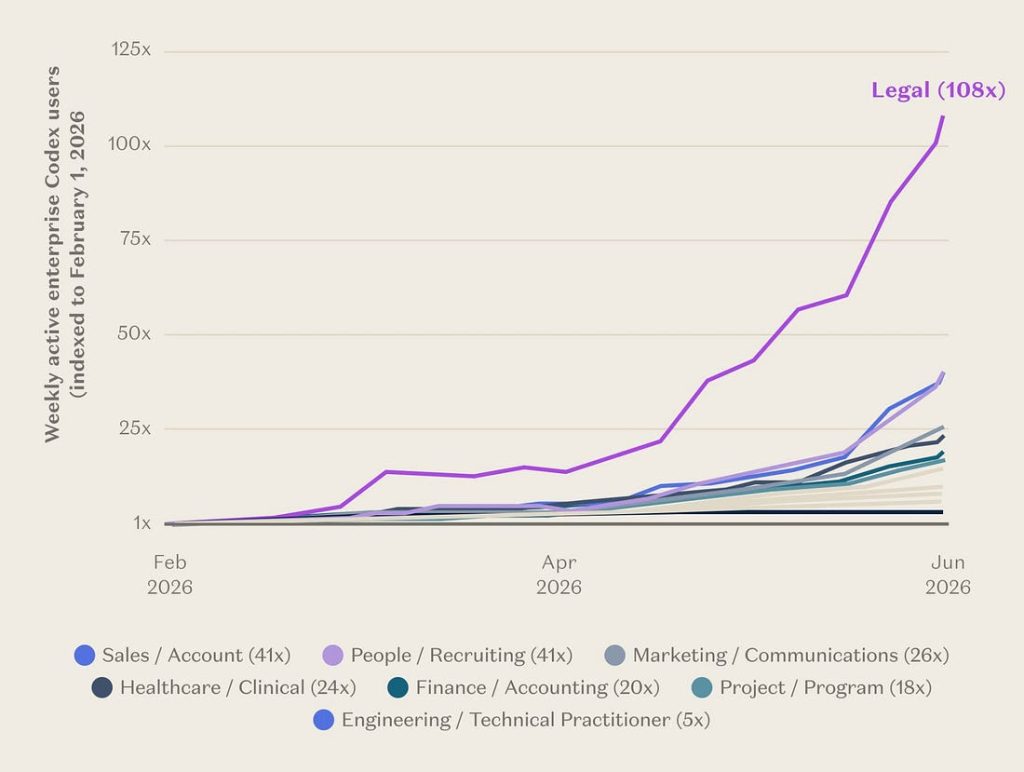
That’s why that Request for Production is so unnerving because all of a sudden… it’s your house that’s on fire.
What Heppner Didn’t say
The most groundbreaking case to date on this issue was called US v. Heppner No. 25-cr-00503-JSR (S.D.N.Y. Feb. 17, 2026) (Rakoff, J.), in which Bradley Heppner, a criminal defendant, used a consumer tier of Claude for research that he shared with his lawyer. This is the same tier that most everyone I talk to has now; either free or $20/month. The prosecution asked for Heppner’s Claude AI exchanges and AI-generated documents; over the defendant’s objection, the Court held that Heppner’s use of Claude was not protected by either the attorney-client privilege or work product doctrine and was discoverable.
Let’s review the elements of attorney client privilege. A communication: 1. Made to counsel, 2. With the expectation of confidentiality 3. For the furtherance of legal services.
Heppner’s use of AI wasn’t privileged, said the Court, rightfully. Claude isn’t a lawyer. A consumer AI product has no reasonable expectation of confidentiality.
Mr. Heppner may as well have gone to Daley Plaza and shouted “I diverted $150 million from a company I was on the board of to myself by creating pretend debts to a company I controlled, and used that to renovate my Dallas mansion and fly on my private jet… can anyone think of any legal arguments I could make to defend myself?” then emailed the any replies he heard to his lawyer. There’s no reasonable expectation of privacy there.
A lot of lawyers are chattering about the Heppner case as if it taught us lawyers anything about the proper use of AI.
It didn’t.
Heppner taught us that a client’s use of AI may not be privileged, but we learned nothing from the case about our own use. And in doing so, it’s left a huge gap, and I’ve talked to a lot of lawyers who assume that how they use AI is safe.
It’s not.
What Kovel Did Say
In consumer models of AI like Claude, you can turn “training” off but everything you type in is still as discoverable. As they say “if the AI is free, your data’s the fee.” Opting out of training doesn’t fully opt you out.3 Further, Anthropic expressly disclaims privacy.4
By giving Claude access to communications from your client in which they had an expectation of confidentiality, in order to further legal services, you are violating the same tenet Heppner violated in his case. You may as well print out your client emails, show them to people at Daley Plaza, and ask for help responding to the client’s questions.
Many lawyers may think they are protected from disclosure by United States v. Kovel 296 F.2d 918 (2d Cir. 1961). But that argument is a dud. Kovel holds that the attorney-client privilege extends to agents of a law firm when that person’s services are necessary for the lawyer’s practice. The Kovel court used an accountant as an example, but modern equivalents are e-discovery vendors or cloud providers.
A consumer AI platform that sets its own terms, retains data at its discretion, and owes you no duty of confidentiality is not a Kovel agent, it’s a stranger you are handing your client’s confidences to, who has no problem turning the information over to someone who requests it in a subpoena.
The Response
You may object to the Request for Production No. 14 based on attorney-client privilege but you’re going to be sweating bullets hoping that opposing counsel hasn’t read this blog, because I’ve written their response to your objection for them.
Part 2: The Solution, and a free tool to write your own AI policy in ten minutes…
- I find that there are three types of attorneys: The savvy are using it to become even more competitive in their field. The lazy are still using AI as a glorified Google. The ostriches are avoiding it altogether and in doing so violating the duty that is a part of their law license to stay abreast of new technology (as Judge Posner might put it “the ostrich is a noble animal, but not a proper model” for the adoption of AI. Gonzalez-Servin v. Ford Motor Co., 662 F.3d 931, 934 (7th Cir. 2011).
- https://substack-post-media.s3.amazonaws.com/public/images/c4893732-9e7f-4b51-8c56-b2a96b668508_1898x1431.png (1898×1431)
- https://www.anthropic.com/legal/consumer-terms at Sections 4 and 5
- Id at Section 11
