
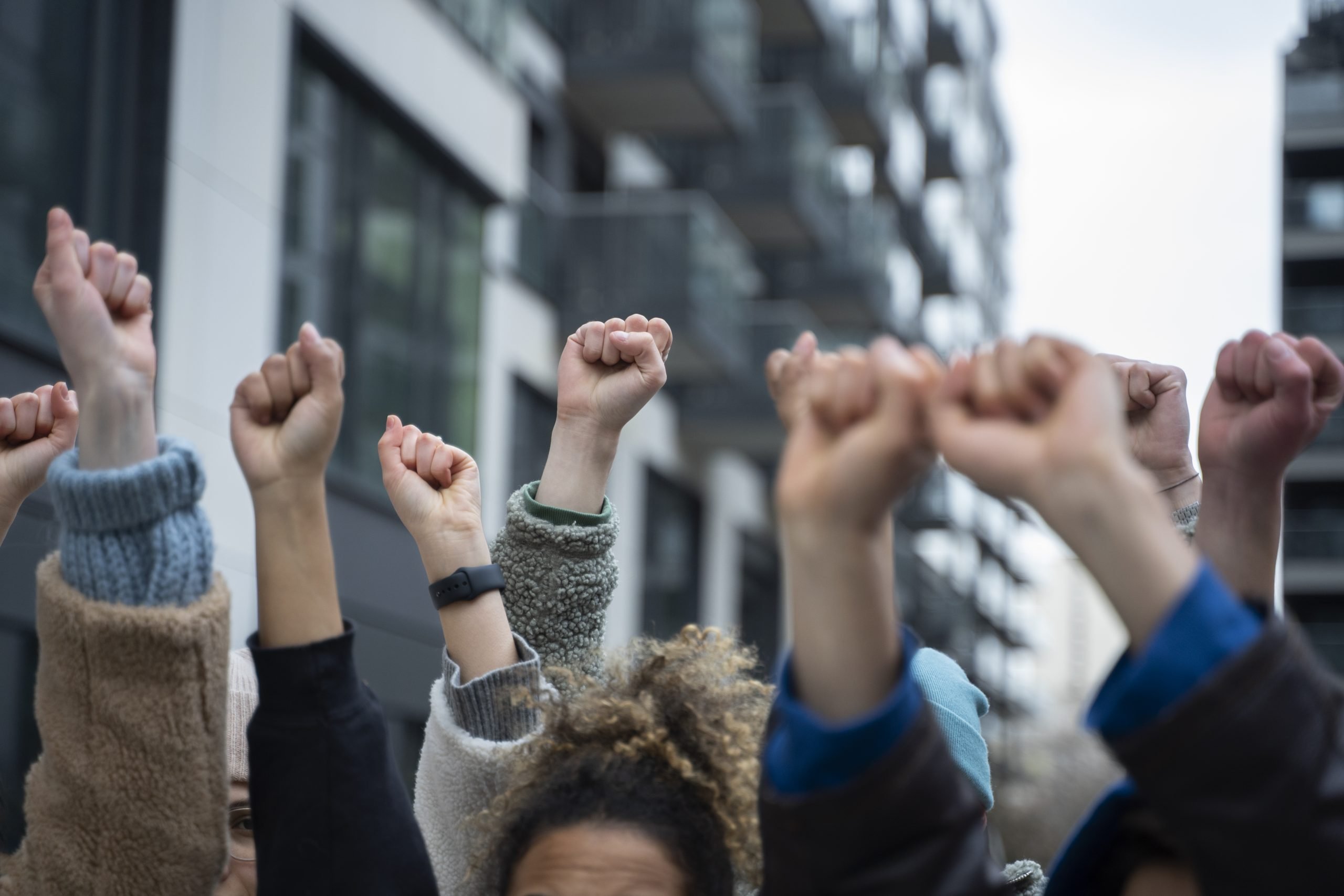
Protests are a critically important part of our legal system. Historically, they have toppled unjust laws and forced governments to act. The right to peaceably assemble and speak freely is invaluable when either human rights or legal rights are being infringed.
But across the country, people are showing up to protest and ending up arrested, leading to consequences that could derail lives. These people may have known their rights, but didn’t have legal support and weren’t prepared for what could happen.
Prepare: With or Without an Attorney
If you are planning to organize or participate in a protest, educate yourself about ways to minimize your risk of arrest. The government is allowed to restrict the “time, place and manner” in which people protest, so you have to check the bounds of what is allowed.
Permits. Depending on the size and nature of the demonstration, a permit may be required. Protesting without one if it’s required gives law enforcement grounds to disperse the crowd or make arrests. A lawyer familiar with local regulations can tell you exactly what is required, help you obtain the necessary permits, and advise you on any restrictions that apply to your specific location.
Restrictions. There are actions that feel like protest but can cross into legally gray areas like blocking traffic, entering private property, using certain materials for signs, wearing masks. The legality of each of these varies by jurisdiction. Getting clear guidance in advance means you can make informed decisions about what you are and are not willing to risk.
Emergency Contacts. Before you protest, have a specific phone number (ideally a legal hotline or a direct attorney contact) written in permanent marker on your forearm. Not saved in your phone. On your arm. If you are arrested, your phone may be confiscated. You have the right to make a phone call, and that number needs to be accessible immediately.
Know what to Say (and what not to). One of the most important things a lawyer can tell you in advance is this: if you are stopped or arrested, you have the right to remain silent, and you should use it. You are not required to answer questions beyond providing basic identification in most states. Many people, in a moment of stress, try to explain themselves to officers and inadvertently say things that are later used against them.
Know What Kind of Lawyer You Need
Civil Rights Attorney. This is your primary choice. Civil rights attorneys specialize in constitutional law, including First Amendment protections and Fourth Amendment protections against unlawful search and seizure. They understand how protest-related cases work, how local law enforcement typically operates, and how to challenge government overreach.
Criminal Defense Attorney. If there is any chance of arrest you also want access to a criminal defense attorney. These lawyers handle the charges that can follow an arrest: disorderly conduct, failure to disperse, trespassing, obstruction, and in more serious situations, rioting charges.
Legal Observer Organizations. In addition to or instead of a private attorney, you can connect with organizations that specifically support protesters. The National Lawyers Guild (NLG) deploys trained legal observers at demonstrations across the country. These observers (identifiable by their lime green hats) document what happens and can serve as witnesses if rights violations occur. The NLG also typically operates legal hotlines during large protests and know-your-rights materials. The American Civil Liberties Union (ACLU) is another invaluable resource, also offering know-your-rights materials.
Local legal aid societies may also be able to connect you with pro bono or reduced-cost representation if private attorneys are beyond your financial reach.
When vetting a lawyer or organization, look for someone with direct experience in protest and demonstration cases, familiarity with your local jurisdiction, and a track record of handling civil rights matters. A general practice attorney with no civil rights background is far less equipped to help you than a specialist.
What a Lawyer Can Actually Do For You
Before the protest. Reviewing and securing permits, advising on the legal limits of planned activities, preparing know-your-rights materials for participants, and coordinating legal observer presence.
During the protest. Having a legal observer on the ground documenting events, operating a hotline that arrested individuals can call immediately, and being positioned to respond quickly if mass arrests occur.
After an arrest. Appearing at arraignment, challenging the legal basis of an arrest, filing motions to suppress evidence obtained unlawfully, negotiating with prosecutors to reduce or dismiss charges, and representing you at trial if necessary.
In the long term. Filing civil lawsuits against law enforcement agencies or municipalities for excessive force, unlawful arrest, or violations of your First and Fourth Amendment rights. These suits can result in monetary damages and just as importantly, create accountability and push for policy change.
What Happens Without Legal Support
In the immediate moment. Without knowing your rights, you may consent to searches you are not legally required to allow. You may answer questions that incriminate you. You may sign documents (including in some cases, agreements not to return to a certain area or admissions of wrongdoing) without understanding what you are agreeing to.
On the criminal side. Charges stemming from protest arrests can range from minor misdemeanors like disorderly conduct or failure to disperse, all the way up to felony charges like rioting in some jurisdictions. Misdemeanors can carry fines and jail time of up to a year. Felony charges can carry years in prison. Even if charges are eventually dropped, the arrest itself appears on your record until it is expunged… a process that requires its own legal work.
Over the long term. A criminal record (even a misdemeanor) can affect your ability to find employment, secure housing, obtain professional licenses, qualify for federal student loans, and in some states, vote. For non-citizens, any criminal charge can have serious immigration consequences, up to and including deportation proceedings.
Civilly, if your rights were violated during a protest (if you were assaulted by officers, arrested without cause, or subjected to unconstitutional treatment) you may have grounds to sue. But pursuing that lawsuit without an attorney is extremely difficult. Evidence needs to be preserved quickly. Deadlines, called statutes of limitations, apply. Government agencies have legal teams. Without your own representation, you are unlikely to succeed even in cases where the violation was clear.
Common Misconceptions That Put People at Risk
“I wasn’t doing anything wrong, so I’ll be fine.” This is the most dangerous assumption. Arrests at protests are not always based on individual wrongdoing. Mass arrests occur. Being in the wrong place when an unlawful assembly is declared can get you swept up regardless of your personal behavior.
“I can just explain myself to the police.” With respect, this almost never works the way people hope. Officers making arrests are not the decision-makers when it comes to charges… prosecutors are. And anything you say can be used against you. Politely invoking your right to remain silent and asking for an attorney is a must.
“A lawyer is too expensive.” Some civil rights attorneys take protest cases on contingency, meaning they only collect fees if you win. The National Lawyers Guild and ACLU offer free support. Local legal aid organizations serve low-income individuals. Cost is a real concern, but it is not the barrier people often assume it is.
“Only organizers need lawyers.” Every single person who attends a protest faces potential legal exposure. Organizers face additional risk, but participants are absolutely not exempt.
Practical Steps to Take Before Any Protest
- Find a civil rights attorney or NLG chapter in your area. Search for your local National Lawyers Guild chapter or ACLU affiliate and get their protest hotline number.
- Write the legal hotline number on your arm in permanent marker. Not just saved in your phone. On your arm.
- Research your local laws. Know whether your city requires permits, what the rules are around masks, and what constitutes an unlawful assembly under your state’s law.
- Know your rights script. If stopped: “Am I free to go?” If not: “I am invoking my right to remain silent and I want to speak to an attorney.” Say nothing else.
- Do not bring anything that could be mischaracterized. Leave items that could be construed as weapons at home. Be thoughtful about what you carry.
- Have a plan with your group. Know in advance what you will do if someone is arrested, where you will meet if separated, and who will make calls on behalf of anyone detained.
Having legal support before you protest is not a sign that you expect to do something wrong. It is a recognition that the legal system is complex, that situations can escalate in ways no one anticipates, and that your rights — however constitutionally guaranteed — are best protected when you have someone in your corner who knows how to defend them.
- Your Chicago National Lawyers Guild contact is chicago@nlg.org.
- You can submit to the ACLU here.
- Contact a civil rights attorney and write their number on your arm.
Your voice matters. Make sure you can keep using it.
Disclaimer: This article is for informational purposes only and does not constitute legal advice. Laws vary by state and locality. Please consult a licensed attorney in your jurisdiction for advice specific to your situation.
